 SINCE 2010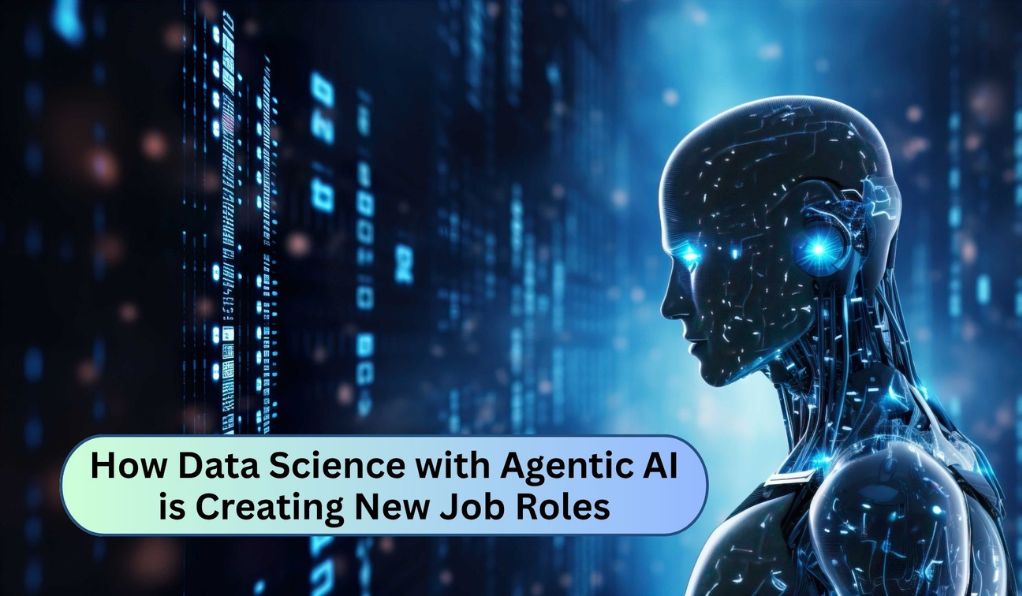
A young professional I spoke to recently shared something that felt very real. He said that a year ago, most of his work involved writing code, cleaning datasets, and preparing reports. Now, he still does all of that, but not in the same way.
But recently, a part of his job has quietly shifted. He now spends more time reviewing results, asking questions, and deciding what needs to happen next. That small change reflects a much larger shift in the world of data science.
The field is not slowing down. In fact, it is growing. But the way work is being done is changing, and that change is creating new kinds of roles. A big part of this transformation is coming from the rise of Agentic AI, which is gradually becoming part of everyday workflows.
For students and working professionals in India, this is an important moment to understand what is happening. Because the roles you prepare for today may look slightly different by the time you step into them.
Data Science Work is Evolving
Traditionally, data science followed a fairly structured path. You would collect data, clean it, analyze it, and then present your findings. A lot of time and effort went into preparing data before any meaningful insight could be generated. That structure still exists, but the way we move through it is becoming more efficient.
With systems that can carry out sequences of tasks, parts of the process are no longer entirely manual. Data can be gathered and organized more smoothly. Initial exploration can happen faster. As a result, professionals are not spending all their time executing tasks. They are spending more time thinking about what the data means and how it should influence decisions. This shift is what is opening the door to new roles.
Importance of Workflow Design
One of the first changes you notice is the growing need for people who can think about how work should be structured.
Earlier, the focus was on completing tasks correctly. Now, there is increasing value in setting up processes that make those tasks easier to manage. This means understanding how data flows, how different steps connect, and how outcomes are generated.
For example, instead of manually creating reports again and again, a professional might design a system that handles the entire process. Data comes in, gets processed, and produces insights with minimal manual effort. This kind of thinking is becoming more important, and it is shaping a new type of role within data science.
As systems begin to handle parts of the workflow, another kind of role naturally becomes more important. We need an individual who can understand what the system output is. Such roles are less dependent on building models and more focused on comprehending the results of the models.
The individuals in such roles work in close proximity of different teams in the business organisation. They help others understand the results of the data while driving data led business decision making on the company floor. Such roles require clarity of mind and good communication skills. It also requires an understanding of how decisions are made in real situations.
For many graduates, this creates opportunities to move into roles that combine analysis with decision support.
Roles Mixing Domain Knowledge with Data
In many industries, data alone is not enough. It needs context. It needs someone who understands how the business works. Agentic AI systems can process information, but they do not fully understand the environment in which that information exists. They need guidance.
This is where professionals with domain experience become valuable. A person who understands finance, healthcare, marketing, or operations can use data more effectively because they know what questions to ask. This combination of domain knowledge and data skill is creating new kinds of roles that did not exist in the same way before.
Oversight and Validation are Essential
As we give more autonomy to Agentic AI systems, the need for oversight increases at the same time. Even if a system can perform tasks, someone still needs to ensure that the results are accurate and meaningful. Someone needs to check whether the process is working as expected.
This has led to roles that focus on reviewing outputs and maintaining quality. These professionals look at results, identify inconsistencies, and make sure that decisions are based on reliable information. It may not be the most visible role, but it is becoming an important part of how organizations manage data driven processes.
What this means for Students Preparing for a Data Science Career
For students who are graduates and planning to enter this field, this shift changes how preparation should be approached. The good news is that there are more opportunities than before.
You are not limited to a single type of role. At the same time, this means you need to be adaptable. Start with strong fundamentals. Learn how data works, how it is analyzed, and how to approach problems logically. Then, go a step further. Try to understand how processes can be improved. Think about how tasks can be connected and managed more efficiently. Students who develop both technical understanding and practical thinking tend to adjust more easily to these evolving roles.
For Working Professionals
For working professionals, this change is less about starting again and more about building on what you already know. If the individual is already engaged in a technical or business role, the added learning of data science helps you with a fresh outlook on current work. Once you begin to comprehend how systems work, you can delve into workflow management and add another dimension to your skillset. This allows you to be more functional and efficient.
Learning Fundamentals is Fundamental!
Data, logic, and analysis form the base of everything in this field. Without this understanding, it becomes difficult to evaluate results or make informed decisions. Systems can support you, but they cannot replace your judgment. This is why professionals who have strong fundamentals and know how to use modern systems effectively tend to stand out.
Conclusion
Data science with Agentic AI is not creating an entire new avenue, rather it is steadily enhancing what is already out there. The focus is gradually shifting from carrying out tasks to designing processes, interpreting results, and supporting business decisions. This shift is opening up new roles that require both technical understanding and practical thinking.
Your Career with DV Analytics
Grasping the budding landscape of data science and agentic AI appears smoother when you have the right kind of support. Here, DV Analytics comes to the rescue by providing you industry oriented practical training in Data Science and Agentic AI.
Candidates get their hands-on approach by working with real-time data, exploring practical business problems, and refining their skills thus preparing them for newer job roles as per industry trends.
Whether you are a graduate seeking an entry point to the job market or a working professional looking for a change of career, DV Analytics provides expert mentorship and structured learning to help you march ahead with confidence.
Contact us today to see how you can craft a successful career in the field of data science with Agentic AI.