 SINCE 2010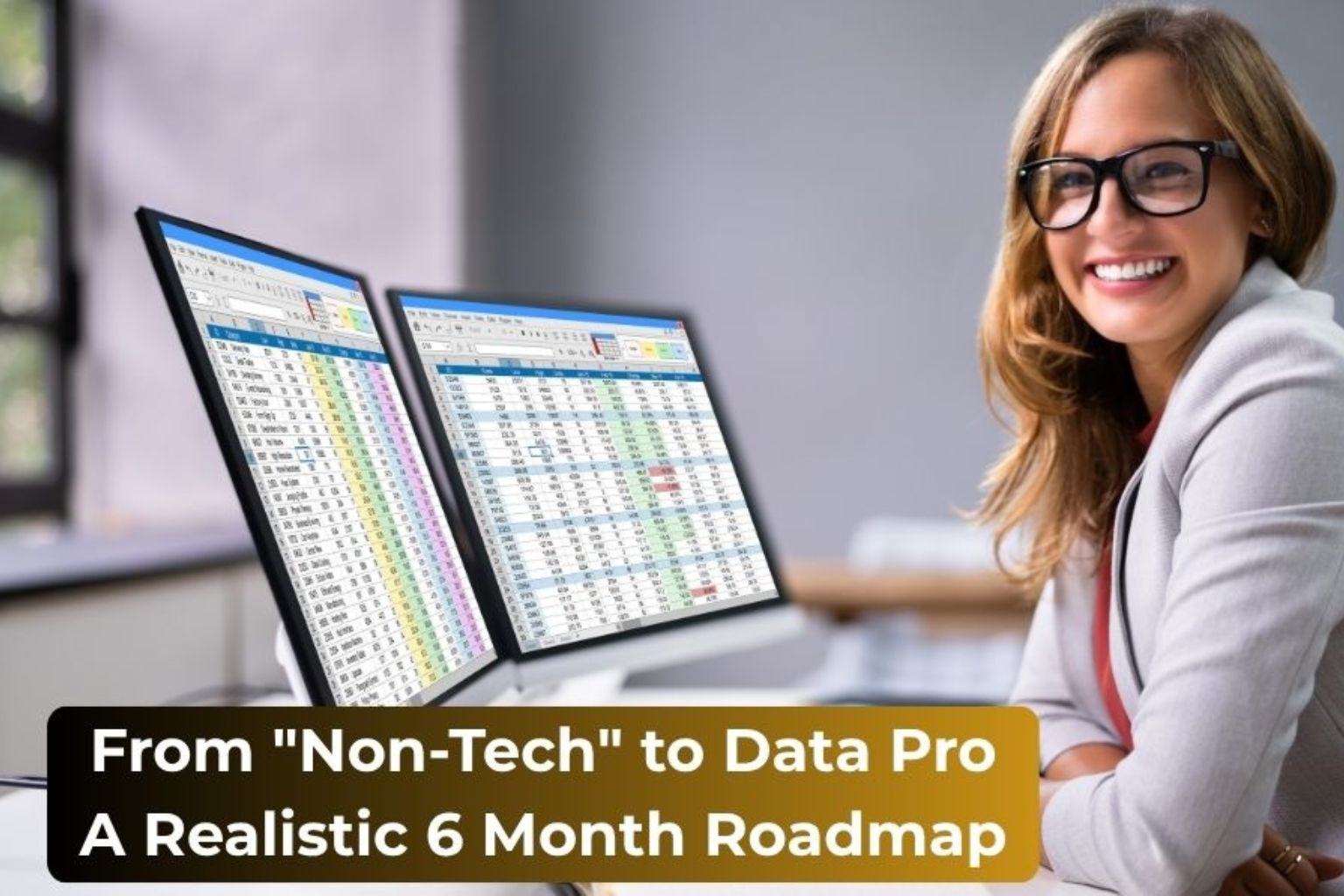
A marketing professional once asked me a question that probably represents what many working professionals quietly feel today. She said, “I understand customers, campaigns, and business targets. But the moment I hear people talk about coding, I feel like data science is meant for somebody else.”
The interesting thing is that she was already closer to analytics than she realised.
Across India, graduates from backgrounds like HR, finance, marketing, operations, sales, and customer support are beginning to look seriously at careers in data and analytics. Some are doing it because they want better growth. Others are doing it because they can see how quickly industries are changing. But almost everyone entering this space from a non-technical background carries the same concern in the beginning.
“What if I cannot learn coding?”
That fear feels real at first because data science often looks more intimidating from the outside than it actually is. People imagine complicated algorithms, advanced mathematics, and endless coding. In reality, most successful transitions happen very differently. Smooth transitions happen when you take time to learn the concepts one at a time instead of diving head-on into the whole thing. This is why having a realistic roadmap matters more than trying to learn randomly.
Understanding why your background is not a disadvantage
One of the biggest misconceptions about data science is that only engineers can succeed in it. The truth is, many professionals from non-technical backgrounds already possess something extremely valuable. They understand how businesses work.
Someone from finance understands reporting and numbers. Someone from HR understands employee trends and organisational challenges. Someone from a marketing field already knows A marketing professional already knows how to discern behavioural patterns of customers as well as monitor the performance of a certain campaign.
Data science is never relegated to merely writing code! Rather, it is about using data to solve practical problems.
Technical skills can be learned with time and consistency. Business understanding usually comes from years of experience. This is why professionals from non-technical fields often adapt better than they expect once they stop doubting themselves.
The first month is about becoming comfortable with data. The first mistake many beginners make is rushing directly into programming. The early stage of learning should actually feel simple. The goal during the first month is not to become an expert. It is to become comfortable around data.
This is why Excel is still one of the best places to begin. Most professionals have already used Excel at some point in their careers, which makes the learning process feel less intimidating. Start by understanding how data is organized. One can start by learning formulas, sorting and filtering data, using pivot tables, and making basic charts.
Initially, you may not feel excited at learning these skills, but they are important for you. It helps you to train your brain into analytical thinking. You brain begins to notice patterns and process how information can be streamlined.
Then, you start to being on SQL. Many people hear the word database and immediately assume it is complicated. But SQL is actually one of the easiest technical skills to begin with because it feels logical. Think of it this way. SQL is simply a language for asking questions from data. What surprises most learners is that SQL does not feel like difficult coding. It feels more like structured problem solving. That realization changes confidence levels significantly.
The third month is usually where the fear of coding begins to fade.
Python is the stage where many learners hesitate again. Not because Python itself is impossible, but because coding carries a certain emotional weight for people from non technical backgrounds. Many assume coding requires exceptional intelligence or advanced mathematics. The reality is much simpler.
Python for analytics mostly deals with one’s understanding of logic and not writing any code! One just has to learn the basics like variables, loops and conditions. Here, you should not jump into advanced topics at a go.
The important thing here is mindset. You are not trying to become a software developer overnight. You are learning how to use Python as a tool for handling and analyzing data. Once learners understand that distinction, the fear usually becomes manageable.
The fourth month is where everything starts connecting. This is usually the phase where learners feel a shift in confidence. Skills like Excel, SQL, Python which might feel as separate tools begin to make sense naturally. Excel helps you understand business data. SQL helps retrieve it. Python helps process and analyze it efficiently. This is also the best stage to begin working on practical projects.
The projects do not need to look perfect. Their purpose is to help you apply concepts in realistic situations. This is often the stage where learners stop seeing themselves as outsiders trying to enter tech. They begin seeing themselves as professionals who can actually work with data.
The fifth month is where communication becomes important. One thing many beginners overlook is that analytics is not only technical work. Companies do not hire analysts simply to create reports. They hire them to explain what the data means. This is why communication and visualization become important during the fifth month.
Learn how to build dashboards, present findings clearly, and explain insights in a simple manner. Interestingly, this is where many professionals from non-technical backgrounds perform very well.
People from HR, sales, marketing, and operations already know how to communicate with teams and stakeholders. That becomes a real advantage in analytics roles. The sixth month is about becoming professionally ready.
By the final month, the focus should shift toward preparing for opportunities. This stage involves refining projects, updating resumes, practicing interview questions, and understanding how analytics roles actually function in companies. That progress matters far more than perfection.
Conclusion
Moving from a non technical background into data science is not unrealistic. It simply requires the right structure and expectations. The fear of coding usually disappears once learners realize they are not trying to become expert programmers overnight. They are learning how to use data to solve practical business problems.
By focusing step by step on Excel, SQL, Python, projects, and communication, graduates from backgrounds like HR, finance, marketing, operations, and sales can build strong careers in analytics. The bottom-line is consistency, not perfection.
Tailor your Transition with DV Analytics
Career transitions become much easier when learning is structured properly. DV Analytics offers practical training in Data Science and Artificial Intelligence designed specifically for learners who want real industry ready skills.
Students work on practical datasets, realistic business scenarios, and hands on projects that help bridge the gap between learning and employment.
Whether you are a fresh graduate or a working professional planning a career transition, DV Analytics provides mentorship, structure, and industry focused guidance to help you move forward confidently.
Every professional working in analytics today once started exactly where you are now.
Give us a call today to learn how we can help you.