 SINCE 2010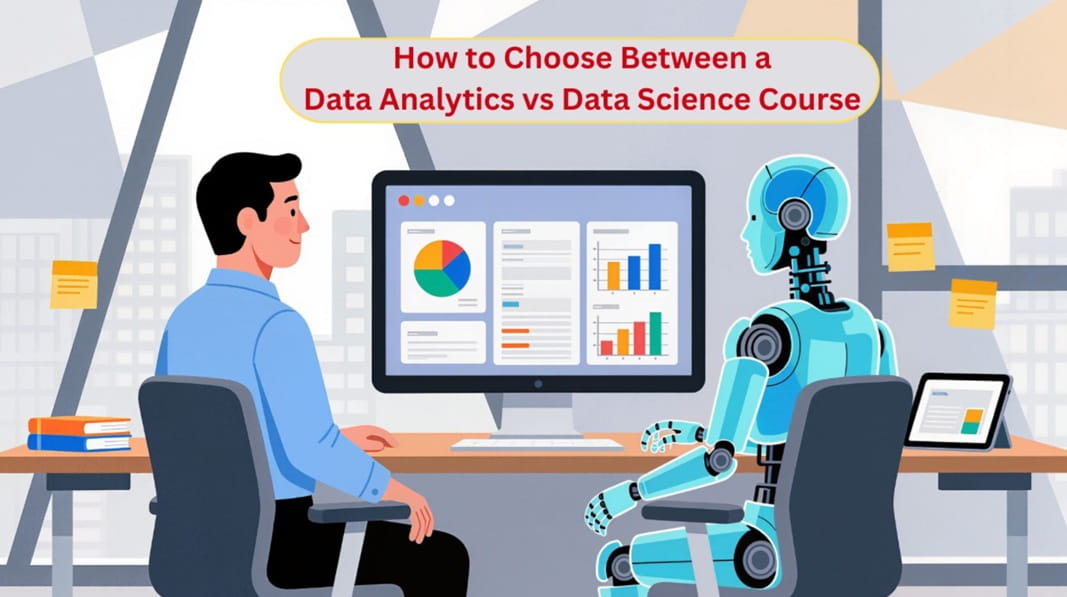
Data Analytics vs Data Science, what is the actual difference?
Data Analytics mainly delas with explaining the past and present, looking at patterns, crafting dashboards and answering the questions what happened and why it did so. The tools mainly used for this are Excel, SQL, basic Python/R, SAS and visualization solutions like microsoft Power BI, Salesforce Tableau etc.
Data Science leans more towards prediction and automation, building models, deploying Machine Learning (ML) systems, fiddling with algorithms and Msolty doing engineering with data pipelines. The tools employed for the same are Python/R, ML frameworks like TensorFlow/PyTorch/Keras), PySpark, along with cloud computing solutions like Amazon AWS, google cloud platform (GCP), microsoft Azure and model deployment practices.
Simply put, Data Analytics is more about finding insights and delving into storytelling whereas Data Science deals with models and automating workflows. Though both data science and data analytics overlap with each other, but the major difference is the extent of learning! While data analytics focuses on reporting/EDA; data science dives deeper into (Machine Learning) ML & production.
Industry sources show entry level salaries and job expectations reflect this chasm, analytics roles start earlier and are available more widely; data science roles often generate higher pay package as one gains ML and data engineering expertise.
How DV Analytics positions APIDA vs APIDS?
DV Analytics has clear, industry-aligned difference for both programs.
Advanced Program in Industrial Data Analytics (APIDA)
Duration: 6 months.
Focus: DBMS programming with SQL, reporting & visualization (Excel, Tableau, Power BI, Qlik), advanced analytics using SAS, Python/R, dashboard making, storytelling and practical reporting automation.
Offered roles: Reporting Specialist, Data Analytics Consultant, Business Analytics Consultant, Data Scientist (entry transition possible), Principal Consultant (longer career path).
Salary guidance: DV analytics has a track record of minimum salary as follows;
Freshers ₹6–8 LPA; early-career (1–3 yrs) ₹8–12 LPA; 4–8 yrs ₹12–25 LPA and beyond.
Who should go for it?
Graduates who want quick placement into analyst roles, business users who want to own reports/dashboards, and professionals shifting from domain roles (finance, marketing, operations) into analytics.
Advanced Program in Industrial Data Science (APIDS)
Duration: 6–8 months
Focus: Everything in APIDA along with the added skills like machine learning, deep learning using TensorFlow/Keras, PySpark/Big Data, cloud computing, MLOps and generative AI, advanced AI, Agentic AI techniques. Here, there is a renewed emphasis on production-ready skills.
Offered roles: Data Scientist, ML Engineer, Data Engineer, AI Specialist, AI Architect, Principal Consultant.
Salary guidance: DV Analytics alumni have got the following minimum salary packages in Data Science roles; Freshers: ₹8–10 LPA; 1–3 yrs ₹10–15 LPA; 4–8 yrs ₹15–35 LPA; 8+ yrs over ₹35 LPA going to 70 LPA.
Who it’s best for?
Candidates who want to build ML models, deploy AI solutions, work on big data stacks or aim for higher technical roles in AI/ML teams must go for the APIDS curriculum at DV Analytics.
Curriculum & skills – What Candidates Shall Actually Learn
APIDA (Analytics-focused):
- Strong SQL, Excel & reporting workflows
- Dashboards + storytelling (Tableau / Power BI)
- Exploratory Data Analysis and business KPIs
- Intro to predictive analytics (basic models) and automation tools (Alteryx)
APIDS (Science + Engineering):
Everything above, plus:
- Machine Learning (supervised/unsupervised) and deep learning
- Big Data frameworks (PySpark, Scala) and distributed computing
- Cloud basics and MLOps for model deployment
- Generative AI, Agentic AI and advanced model engineering
This means APIDS demands a steeper learning curve but opens technical roles that are harder to reach through analytics-only training.
Duration & time-to-hire: realistic expectations
APIDA (5–6 months): Advisable if one wants to swiftly transition into analyst roles and start earning early.
APIDS (6–8 months): Similar timeframe but with heavier technical content; one must dedicate more time in projects and coding practice to be job-ready for ML roles.
100% Placement Assistance
Both programs at DV Analytics include placement assistance and hands-on projects. It is these realtime projects which employers look for in a candidate the most. DV Analytics offers real-world projects and placement support which shortens the time-to-hire when combined with consistent practice.
Salary Expectations (India context)
The data analytics and data science salaries vary by city, company size and candidate profile.
External market sources show typical range:
Data Analyst (entry): roughly ₹5-8 LPA for freshers in broad market averages; experienced analysts (3–5 yrs) can reach ₹8–16 LPA and more given the domain and tools used.
Data Scientist / ML Engineer:
entry-level can start around ₹5–10 LPA, with mid-levels typically ₹12–20 LPA and senior levels much higher. Up-to-date market reports indicate the averages have been volatile but the premium for ML/AI skills remains strong.
Which program should you choose?
If you are someone inclined towards making dashboards, solving business problems and going for visual storytelling, you must opt for the APIDA module.
But, in case your are more interested in coding, mathematical solutions and statistics, models and want to build ML products, then your calling lies in APIDS.
Also, if you want the fastest path to employment with decent pay, APIDA offers lower barriers while u can be ready for interviews faster.
But, if one wants to take full advantage of long-term learning, AI/ML skills, a premium salary and more, then you need to pursue APIDS.
Still in Doubt?
Begin with analytics fundamentals (APIDA-level skills). Most professionals later on make the move to data science when they are done with skills like SQL, Python and core statistics.
How to evaluate ANY course?
Project portfolio: Are projects real-world and industry-aligned? DV Analytics always stresses on projects.
Placement track record: Does the provider publish placement stats and recruiter ties?
Curriculum breadth vs depth: Does the program offer broad learning or dives deep into all aspects of various tool? APIDS goes deeper into ML; APIDA offers broader solutions for analytics.
Mentor & industry access: Live mentorship and hiring briefings are more important than certificates.
Post-course support: mock interviews, CV reviews and employer introductions fast-track hiring.
Conclusion
If you’re a beginner aiming for quick employability and robust business-facing roles, go for APIDA. However, if your objective is building ML products, working on large-scale datasets or becoming an AI engineer, choose APIDS.
Both APIDA and APIDS programs at DV Analytics are structured for industry readiness. They include hands-on projects, placement support and skill stacks based on real job roles and salary bands.
APIDA for reporting/analytics roles and APIDS for ML/AI-heavy roles. DV Analytics transparent duration and salary guidance, coupled with project-driven learning, make it a strong, practical launchpad for beginners who want outcomes, not just theory.
Ready to start your journey? Connect today!