 SINCE 2010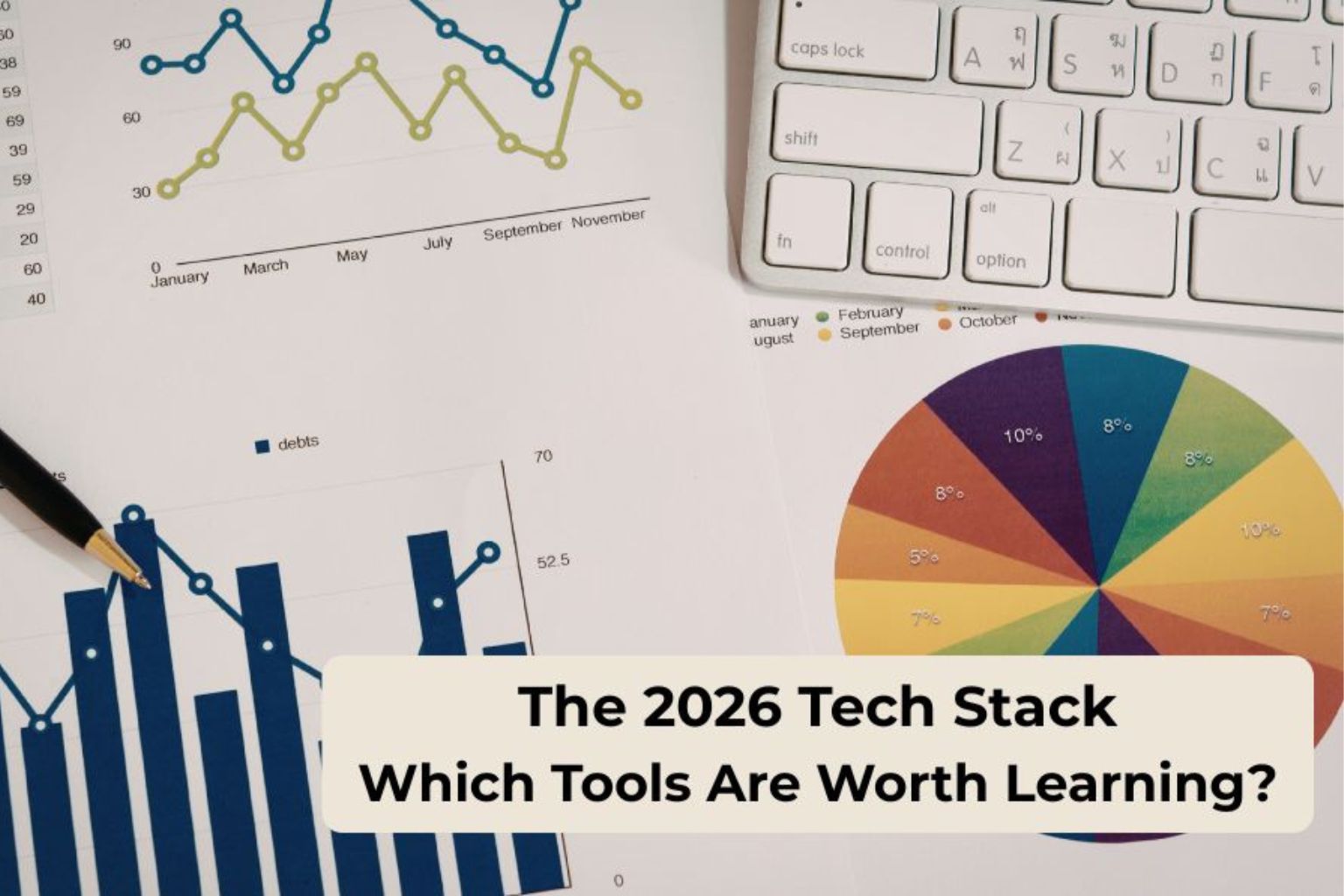
A couple of years ago, learning “tech skills” felt far more straightforward than it does today. Most people entering analytics or data science followed almost the same route. Learn Excel properly, pick up SQL, move into Tableau or Power BI, and then maybe learn Python once you felt comfortable enough.
For a long time, that path worked well because companies were hiring for clearly defined roles. Analysts handled reports and dashboards. Developers built applications. Data scientists worked on prediction models. Everyone more or less knew what their role looked like.
Now the boundaries feel much less clear.
A marketing executive today may be expected to work with dashboards. A finance professional might need automation skills. Someone in operations could suddenly find themselves using AI tools to improve workflows. The industry has shifted quietly, but significantly.
That is why so many students and working professionals are confused right now. Every week there is a new conversation online about AI tools, automation platforms, or frameworks that are supposedly changing everything. After a point, it becomes difficult to tell which skills are genuinely important and which ones are just temporary trends.
The interesting thing is that most companies are not throwing away traditional tools at all. They are simply building newer AI driven systems on top of existing foundations. That is the part many people miss.
Why the Basics Still Matter?
There is a tendency today to jump directly toward advanced AI tools because they look exciting. But when you spend time inside actual companies, you notice something different.
Most organizations still struggle with basic data problems.
Teams still need clean reporting. Businesses still need structured information. Managers still want dashboards that clearly explain performance. There are limitations to AI systems if the data is not structured. This is exactly why foundational skills continue to matter. The tools may evolve, but companies still need professionals who understand how data works underneath the surface. Without that layer, modern AI systems cannot function properly anyway.
Why SQL continues to survive every trend cycle
Almost every year, somebody claims SQL is becoming outdated. Yet companies continue hiring people who know it well. The reason is honestly very simple. Data still sits inside databases, and businesses still need people who can retrieve it correctly.
Even modern AI workflows rely heavily on structured information. Before anything intelligent happens, someone needs to organize the data properly and ask the right questions. That is where SQL continues to remain relevant.
What surprises many beginners is that SQL feels far less technical once they actually start using it. It is mostly logical thinking. You are asking questions from data in a structured way.
Which customers purchased the most last month? Which campaigns generated stronger conversions? Which city underperformed compared to expectations? For graduates entering analytics, this is one of the safest skills to invest time in because it applies almost everywhere.
Why are dashboards still everywhere despite AI growth?
A lot of people assume AI tools will completely replace dashboards and visualization platforms. But if you spend enough time around decision makers, you realize why that probably will not happen anytime soon.
Leaders do not just want raw information. They want clarity. A good dashboard tells a story quickly. It helps someone understand what is improving, what is failing, and where attention is needed. That is why tools like Power BI and Tableau continue to remain valuable even as AI grows rapidly.
Of course, the tools themselves are changing. Many platforms now include AI generated summaries and automated insights. But even then, somebody still needs to understand the business context and decide what actually matters. Technology can surface patterns. Human judgment still decides which patterns deserve attention.
Why Python keeps becoming more Useful?
Python is one of those rare technologies that keeps expanding into new areas without losing relevance. Earlier, most people associated Python mainly with analytics or machine learning.
Today, it is being used across automation, workflows, integrations, AI systems, and even day to day operational tasks. Part of the reason is flexibility. A professional who learns Python is not limiting themselves to one role. They can move into analytics, automation, AI integration, or intelligent systems depending on where their career evolves later. For students and working professionals, this matters because careers are becoming far less linear than before.
Very few people now spend their entire careers doing only one type of work. Roles evolve, expectations change, and technology keeps shifting underneath the industry. Python adapts well to those shifts, which is why it continues to remain relevant year after year.
How AI Integration is Altering Workplace Opportunities?
AI is bringing the biggest shift across industry. Business organisations are not using AI just to look cool or innovative, rather they want AI in their everyday operations. Hence, they are looking for skilled human resources who can map how the trending AI solutions align with company business.
Interestingly, companies are not expecting everyone to become advanced AI researchers. What they actually need are practical professionals who can combine analytics knowledge with AI driven systems in useful ways. That difference matters because it makes the field much more approachable than people assume.
For students and graduates entering the industry, the smartest path is usually the most balanced one. Start with fundamentals because they create stability. Learn SQL properly so you understand how data works. Learn visualization tools because communication matters in every business environment. Learn Python because it opens doors into analytics, automation, and AI workflows.
Once these foundations feel comfortable, begin exploring modern AI systems gradually.
Trying to skip fundamentals usually creates confusion later because advanced tools still rely on basic concepts underneath. More importantly, avoid comparing your learning speed with people online. Many professionals quietly build strong careers simply by learning steadily and consistently over time.
Conclusion
The 2026 tech stack is not really about choosing between traditional analytics and AI. It is about knowing how both are now codependent on each other.
Tools like SQL, visualization solutions, and Python are important as the basis of modern workflows. Similarly, AI integration and automation tools are becoming increasingly important as companies modernize operations. The people who stay relevant long term are usually not the ones trying to learn everything at once. They are the ones who understand the basics deeply and continue evolving steadily over time.
Industry Ready Skills with DV Analytics
Learning technology becomes much easier when the path is structured properly. DV Analytics provides hands-on industry-oriented training in Data Science, Analytics, and Gen AI with Agentic AI to model deployment to cater to the workplace of tomorrow. Students work with practical projects, real datasets, and business scenarios that reflect how modern organizations actually operate.
Whether you are beginning your career or planning your next move, DV Analytics provides mentorship, hands on learning, and structured guidance to help you grow confidently in an AI driven world. Technology will keep changing. Strong fundamentals and adaptability are what help careers last.
Connect with us today to see how you can achieve full potential in your career.